

Geography Curriculum
Overview
At Westbury C of E Junior School, our Geography curriculum is designed to develop children's knowledge and understanding of the world while progressively developing the geographical skills they need to make sense of it.
Our units are carefully selected and sequenced so that children build on their previous learning as they move through Years 3 to 6. We have carefully mapped the curriculum to ensure that there is progression in both geographical knowledge and geographical skills.
Big Questions
Each unit begins with a Big Question which provides a clear purpose for the learning. The question explores an important geographical theme or idea and gives children a reason to develop and apply their knowledge throughout the unit.
Each Big Question is supported by a sequence of five carefully planned lessons. Children develop the knowledge and understanding needed to address the question while also developing the geographical skills associated with the topic.
Click here to access our Term 1 Knowledge Organisers.
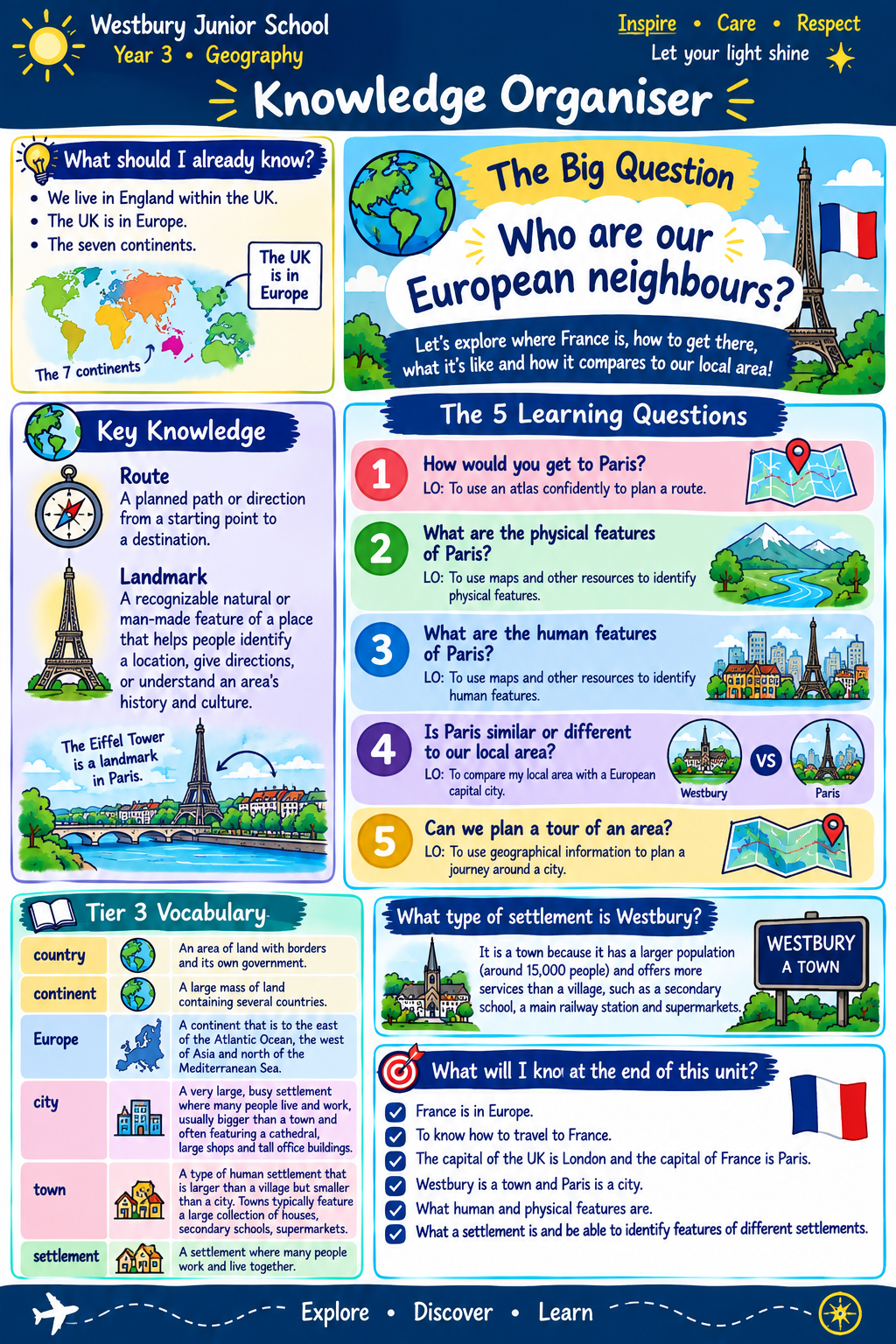
Knowledge Organiser - Year 3 - Term 1
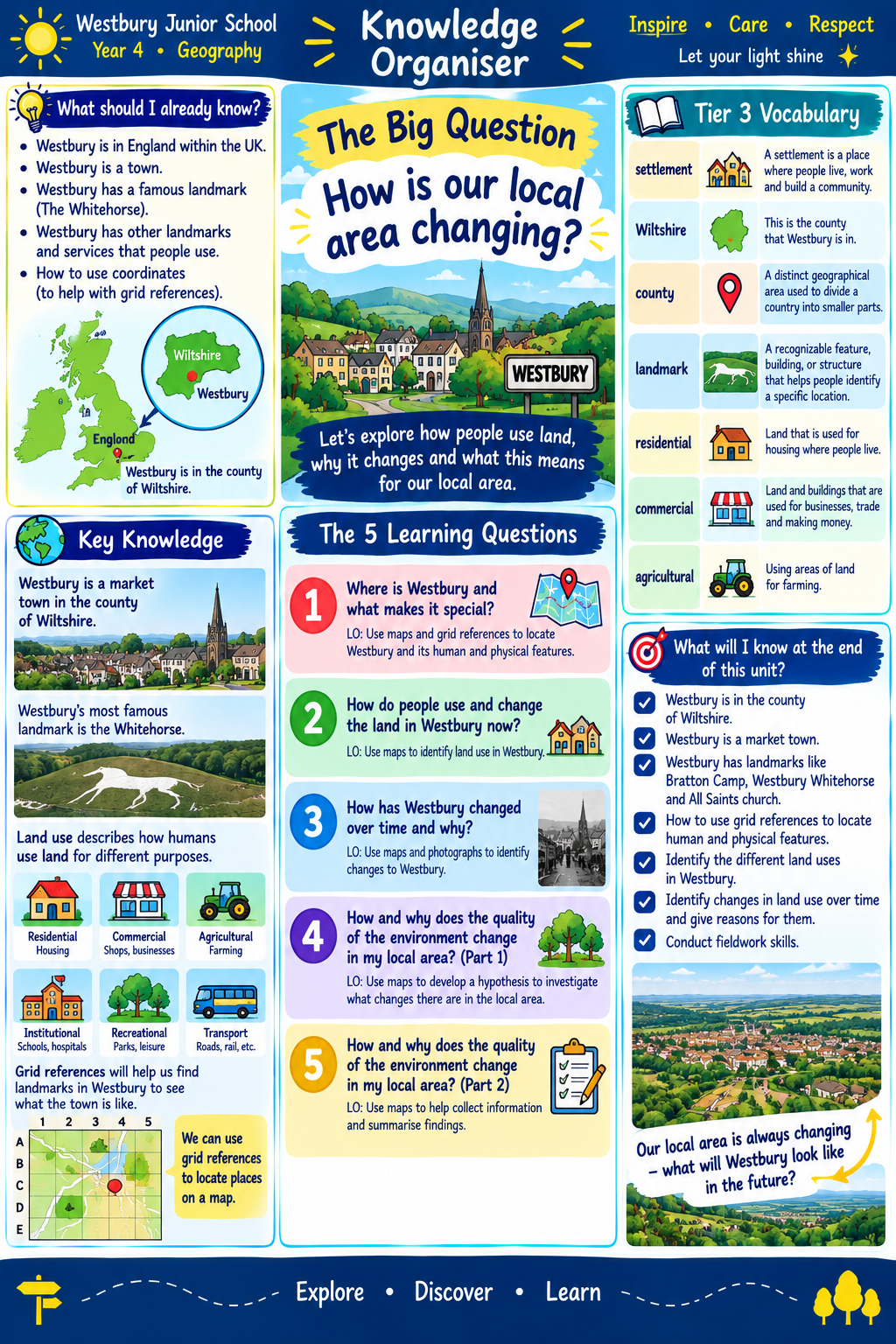
Knowledge Organiser - Year 4 - Term 1
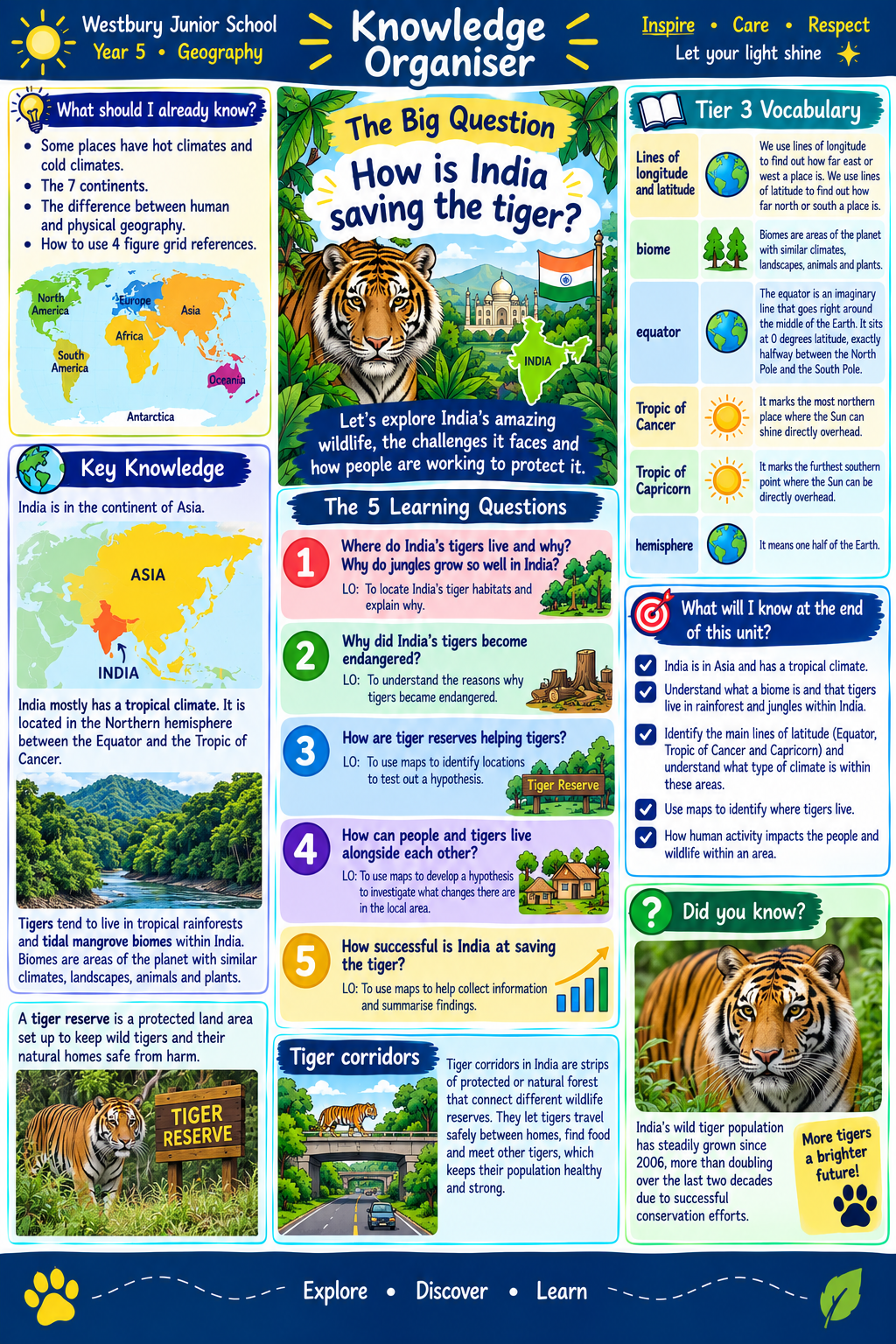
Knowledge Organiser - Year 5 - Term 1
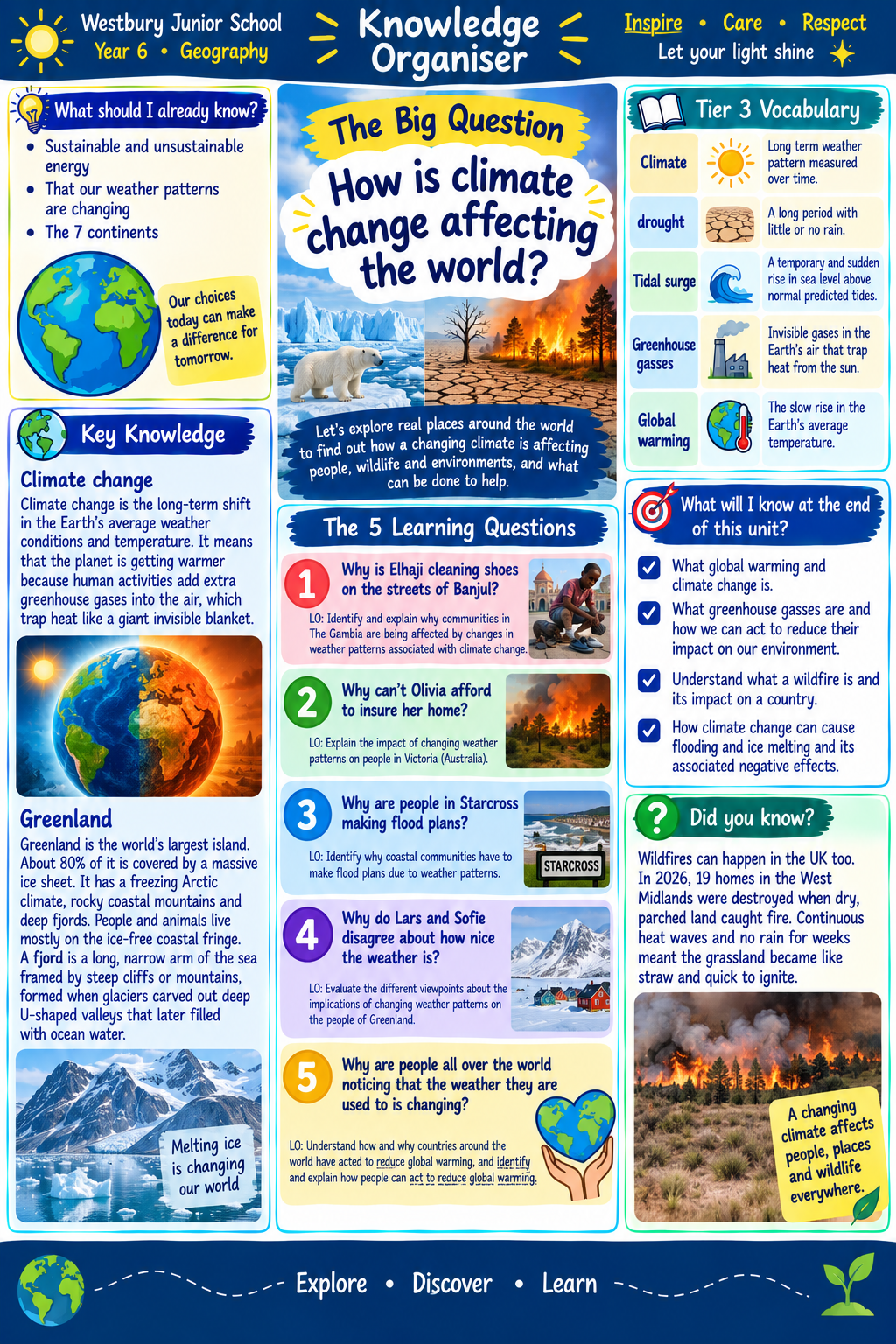
Knowledge Organiser - Year 6 - Term 1
Developing Geographical Knowledge and Skills
We recognise that Geography requires children not only to acquire knowledge, but also to develop and apply geographical skills.
These skills are therefore integrated throughout our units and form part of the lessons, questioning and assessment. Children are given opportunities to use their geographical knowledge alongside the skills they are developing, ensuring that the two aspects of the subject are connected rather than taught in isolation.
Teachers use Connected Geography as a starting point for planning and adapt lessons where appropriate to ensure that learning supports the Big Question and meets the needs of their pupils.
Remembering What We Have Learned
At the end of each lesson, children answer two carefully selected quiz questions based on the key learning from that lesson. Across the five lessons, these questions contribute to a larger Big Quiz.
At the end of each unit, children complete a short knowledge quiz based on the key learning from the unit. Quiz scores are recorded so that children's understanding can be reviewed and knowledge can be revisited where appropriate.
Children also regularly revisit knowledge from previous units throughout the year. This repeated retrieval gives pupils opportunities to practise remembering important geographical knowledge and supports our approach of “know more, remember more.”
Answering the Big Question
At the end of each unit, children have an opportunity to answer their Big Question and demonstrate their learning.
The format can vary depending on the topic and the needs of the class. Children may use double-page spreads, key words and subheadings, Hex structures, sentence stems, images or other scaffolds to help them organise and communicate what they know.
These outcomes allow children to draw together the knowledge and geographical skills developed across the unit and apply them when answering the Big Question.
Vocabulary and Reading
We explicitly introduce and revisit geographical vocabulary throughout our units. Children encounter and use the terminology needed to understand, discuss and communicate geographical concepts.
Lessons also include opportunities for children to read around the subject. This may take place during particular lessons within a unit and provides children with opportunities to encounter additional information and develop their understanding of the geographical topic they are studying.
Progression Across the School
Our Geography curriculum has been carefully mapped to show progression in knowledge and geographical skills across Years 3 to 6.
Children build upon previously taught knowledge while developing increasingly sophisticated geographical skills. The curriculum therefore provides opportunities for children to revisit, practise and apply their learning in different contexts.
Through this approach, Geography lessons provide a balance between knowing and doing. Children develop important geographical knowledge while having regular opportunities to practise geographical skills, retrieve previous learning and apply their understanding to new contexts.